
Story
Secondary Thoughts by Siena: Interview with Joe Schorge
Interviewer: Annika Ljaš Eilat
We spoke with Joe on a Tuesday morning over a 35-minute video call. While he lives in Amsterdam, Joe was in London that day, and I was in Tallinn, Estonia.
1. Can you tell us about your time at Invensys plc (now Schneider Electric)? You’re originally from Massachusetts. Did your time at Invensys influence your decision to spend most of your career in Europe?
Absolutely. In 1999, I was head of IT for a group making high-tech sensing systems for the space shuttle and Hubble Space Telescope. I wanted to experience Europe beyond tourism, so I traded my digitization skills for the opportunity to work in the exciting multinational European context.
I became head of tech for a group with 12-13 factories across Europe – Italy, France, Germany, Eastern Europe, and the UK. The challenge was using technology to integrate these acquired businesses and break down silos. I loved it and found that I had some skill in working across cultures. After the successful completion of that assignment, going back to the US seemed less interesting, so I decided to stay in Europe.
In 2001-2003, I did an MBA at London Business School, which opened my eyes to the funding of new software companies, and thus introduced me to venture capital for the first time.
2. In your opinion, what are the three biggest hurdles holding Europe back, and how would you overcome them if anything were possible?
What's encouraging is that I believe we have broad agreement across the ecosystem on the major problems and frictions, and we're working on them. The EU Inc. initiative is a great example of pushing to harmonize markets - this is still needed in areas like labor law, taxation, equity rules, and public markets to create one big digital market – enabling the flywheel of tech to spin faster.
One problem we still have is that policymakers believe the answer to building robust private markets is to keep building more government investment funds. About 40% of the market is allocated by government actors rather than purely private actors, which will take decades to resolve. At the same moment Europe envies and models the mature and vibrant US market, it continues setting up and enlarging public sector funds, and more recently pulling private capital into them, i.e. actually taking it OUT of the purely private market.
This connects to the fact that Europe's pension and savings capital is not really participating in the innovation economy yet. By contrast, in the US there is very little government money and lots of long-term capital from endowments, foundations, and pensions.
I do wish policymakers were doing more to educate, inspire, and enable this important aspect of market maturation - the Tibi Initiative is one great example where it is working.
And to pension funds, I would suggest: just get started. The perfect is the enemy of the good. If you plan a strategy but never execute, you'll never get comfortable with the asset class or secure the strong returns that are possible for your beneficiaries. Just do something, even start small, and learn from the experience.
In my prior career, I advised pension funds as an investment consultant, and that's what we did. We started, and there's an education process for the wider organization about why we're allocating to this illiquid area, the risk/return profile, and how it all works. Once you make some investments, follow them, get quarterly reporting, and interact with investment professionals and underlying companies, you start to understand, and dare I say get excited about, funding the future.
If you get that right and build a diversified program, you’ll make good returns and also enable a whole range of new economic activity. Companies at early stages today are the ones you will buy into publicly or otherwise in the future, so why not ride the most intense part of their growth curves via venture capital?
3. What excites you these days? Are there any companies on your radar – or perhaps topics or industries – in which you're developing a growing interest?
Every year brings a new hype cycle, and the challenge is to look through the hype and discover real businesses. When you get very fast, high paper returns – as we're seeing with AI-driven products – selling part of your position to lock in gains is a great strategy. But ultimately, we're trying to find products and companies whose innovations will have lasting value.
In AI markets, we have been investing in a picks-and-shovels strategy – the DevOps layer with orchestration, security, training, and deployment tools that enable AI applications.
Europe is very strong here, and we've made a series of direct investments alongside our VCs.
What's also exciting is that Europe is getting more sophisticated in using secondaries: early investors selling into late rounds, secondary funds buying positions, GPs creating liquidity options for their LPs, etc. The good people at Siena saw this and built a fund around it. I'm happy to work with them because together we're having great success working out the risk-return profile that can be win-win around the table.
4. When you look back at the 11-year journey of building Isomer Capital, what was the closest moment the firm came to failing – and what was actually happening behind the scenes at that time?
When I first created the strategy for Isomer, I thought, "I need a cornerstone investor as validation. If I can't convince someone to commit capital to this idea, then it's probably not worthy or ready for the market." I found an anchor, we got launched, and made some investments.
The existential moment was getting that second group of investors to come along – that took another 12-18 months. It was very scary. I didn't have enough money to hire people or really pay myself.
And we'd just had our second baby, while my wife stopped working. I was trying to build a company whilst staying up late doing midnight bottles with our newborn.
When I look back, it was a bit crazy. But I had this fanatical excitement about the evolution of tech in Europe – and nobody was building an institutional approach to it. I thought, "This has to work. If I just work a little bit harder, it'll happen." The chance to work with the smartest people building tech and new VC funds all across Europe really inspired me.
VCs often tell us, "You don't know how hard it is to raise money." I say, "I know exactly how hard it is." Facing that raise-or-die moment gave me empathy and strategies to help people.
If you think raising for a company is hard, try raising a VC fund. If you think raising for a VC fund is hard, try raising a fund of funds.
It's increasing levels of challenge. Nothing good comes easy – if you believe strongly in the thesis, you have to convey that to prospective investors and bring them with you.
5. Is there an investment, a company, or an entire sector that you intuitively knew was right but didn’t pursue – and that still bothers you today?
Ah, you mean what is in my anti-portfolio? Lots. We are sector agnostic within digital tech, so very broad and diversified, which has worked well. But on individual fund and company selection, of course, there are things we did that went on to underperform, and things we declined that went on to perform well. The feedback loops in venture are long, so we try to leave breadcrumbs for ourselves in IC memos to enable a proper study later.
Recent entrants to our anti-portfolio include several companies that are super exciting but valued very highly before much, if any, product/revenue traction. We have already regretted not joining some of these, and there will be more. But it is challenging as a co-investor to underwrite “potential at any cost” especially when long-term pattern recognition suggests there will be a high failure rate despite the impressive people involved, commanding impressive valuations.
6. The secondary market has transformed over the last two decades. What major shift do you see coming in the next 10 years that most investors still misunderstand or underestimate today?
Secondaries will continue to explode in growth. You can only buy what already exists – but the total stock of tech assets in Europe keeps growing rapidly. As the market matures, I would expect 2-5% of that inventory could trade annually, if it follows PE norms. (However, PE does not have 40% government ownership…) Today, we are at a low percentage of assets actually trading. So we'll see a compounding effect: more stock to buy (and the stock is ripening each year), plus more participation, leading to absolute trading levels growing by multiples in the coming years.
Investors, founders, and VCs are all on an education curve about how to use secondaries.
If you study how private equity secondaries evolved in the '90s and 2000s, it provides a very good predictor of how VC secondaries will evolve – the assets are different and present their own challenges, but the problems and solutions are largely the same.
Buying out LP interests, strip sales of portfolios, continuation vehicles – it's funny to me because I worked in a private equity secondary firm before, where this is all normal and has been happening for 20 years. In venture, people say, "Oh, this is new and innovative." It's not new. What's new is these sophisticated tools being brought into venture, and it's about time.
Alongside my colleagues doing secondaries, I give Siena a lot of credit for pioneering this because there aren't 20 mature funds in Europe to model yourself on. Siena saw a market need and developed a fund format to address it. We similarly try to use our long-term pattern recognition to design strategies and funds that work, putting both Siena and Isomer at the front of this wave.
7. What’s always in your carry-on?
My phone and computer — vital to always being prepared - there are times these are my only carry-on.
8. What’s your most irrational habit?
I (still) can't put myself to bed at a decent hour and stay up way too late on my computer.
9. If you weren’t doing this, you’d be…?
Doing something similar somewhere else – I can't imagine anything more fun than working with tech people building exciting things.
10. One app you wish didn’t exist?
Social media and gaming apps for children – the addictive behaviors worry me as a parent.
11. What’s one thing you collect (on purpose or not)?
Remote control toys – planes, boats, cars – dotted around my home office.
This is Secondary Thoughts by Siena – an interview series where legendary entrepreneurs and investors reflect on their investments and broader professional journeys, speaking openly about their wins and losses.
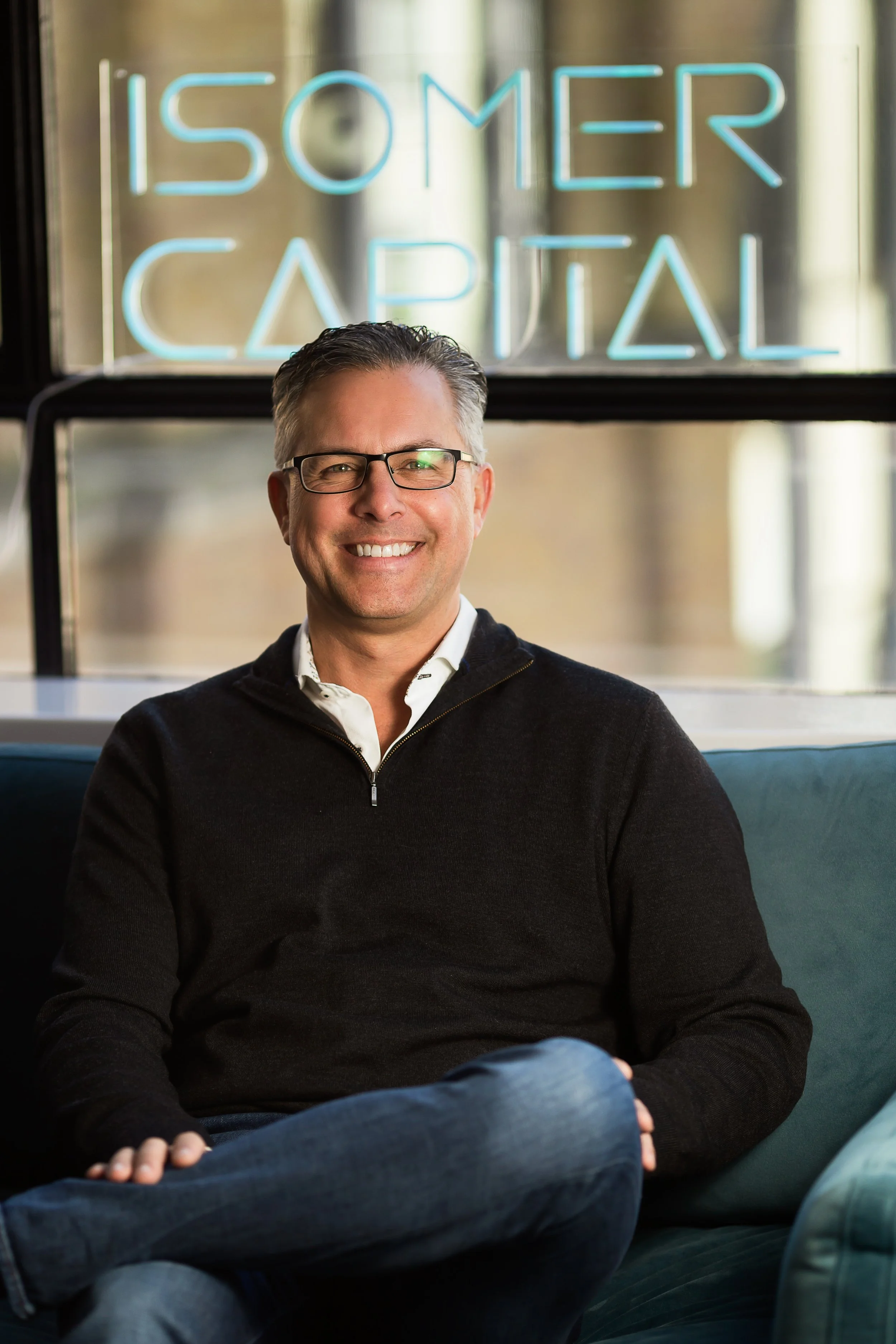
Today’s guest is Joe Schorge, Founder and Managing Partner of Isomer Capital, Europe’s leading institutional VC fund investing across primary, secondary, and co-investments throughout Europe. Before launching Isomer, he worked at Pomona Capital and Cambridge Associates. Joe started his career in technology operations, including roles at Invensys plc (now Schneider Electric) in the US and Europe.
The interview series is produced by Siena, a boutique VC fund focused on secondary investments in high-growth scaleups across the CEE and Nordics. Its portfolio includes success stories such as Bolt, Oura, and Booksy.