
Story
Secondary Thoughts by Siena: Interview with Jan Voss

Interviewer: Annika Ljaš Eilat

We spoke with Jan on an early March morning video call, him in Berlin, me in Tallinn. We opened with a shared laugh of relief: winter, long and grey on both ends, was finally loosening its grip.
1. You've built Cape May at the intersection of family office, asset management, and tax advisory. What was the rationale, and has the competitive edge you assumed proven out?
My background shaped everything. After Goldman Sachs and two Berlin family offices, I noticed a real gap: most wealth managers in Germany operate in silos - your tax advisor, your asset manager, your family office consultant, all separate. That works if you're running a large, established family office. But if you're in the €2–25M range, what I sometimes call the "poor millionaire" bracket, you can't justify paying €300K to one advisor, €300K to another, and a percentage to a bank on top. You need someone who can see the whole picture.
That's what we wanted to build from day one. And so far, it has definitely worked out as we hoped. At our last round of annual reviews, two clients independently told me: "If you weren't here, I wouldn't know who else to call." That said it all.
2. As I am a fan of good stories, could you tell me your favorite/most rewarding story of a successful client outcome, even if you cannot use specific names?
One of my first clients had just sold his business and came to us wanting to invest in private equity. He was already working with a large international bank. He said, "I can manage most of this myself, but I'd value an independent view, and I heard you're well-connected in the PE space."
We looked at his full picture and told him something he wasn't expecting: don't invest in private equity, and consider cutting your overall risk exposure significantly. The bank had him in very high-risk, high-reward products, and with an earn-out still pending, he was genuinely at risk of running out of money within a year or two if things didn't go to plan.
The real question wasn't "which PE fund?" It was: what return does this client actually need?
When we did the calculation, the answer was a double-digit figure. And for that level of required return, the solution wasn't chasing that through private equity or other highly risky investments. It was getting more capital into boring, reliable investments, increasing income, and reducing unnecessary expenses, to bring that required return into manageable territory.
Three or four years on, it's not all resolved, but we've gone from "you might run out of money next year" to "you probably have 10–20 years of runway." And we won him away from that major international bank. For a small firm, that's also very rewarding.
3. You are writing a newsletter, WEEKLY (!). What was the initial motivation behind it? What does writing a weekly newsletter force you to do as a practitioner, and how has it shaped your thinking?
It started on LinkedIn, not as a newsletter. In 2023, I figured I'd need presentation materials anyway, so why not write about the things my clients care about and share them publicly? Private equity, venture capital, family offices, asset allocation for affluent investors.
The LinkedIn algorithm was kind at first, and I went from 2,000 to 18,000 followers. Then in 2024, it turned. I'd always avoided clickbait, which performs but doesn't stick, and that cost me algorithmically. So I moved to long-form and started the newsletter properly.
It forces you to think things through. Sometimes you have what feels like a great idea, and writing it out reveals the gaps. And practically, when a client asks about AI implications for their portfolio next month, I can just send them last week's issue covering exactly that topic. It also substitutes for conferences.
I'm not really a handshaking-at-events type. Four hours of writing reaches at least as many people, and I can do it from home.
One funny lesson: a reader once told me they'd been following the newsletter for two years from day one, then asked what we actually do. A reminder that even after 100 issues, you have to keep communicating your offering clearly.
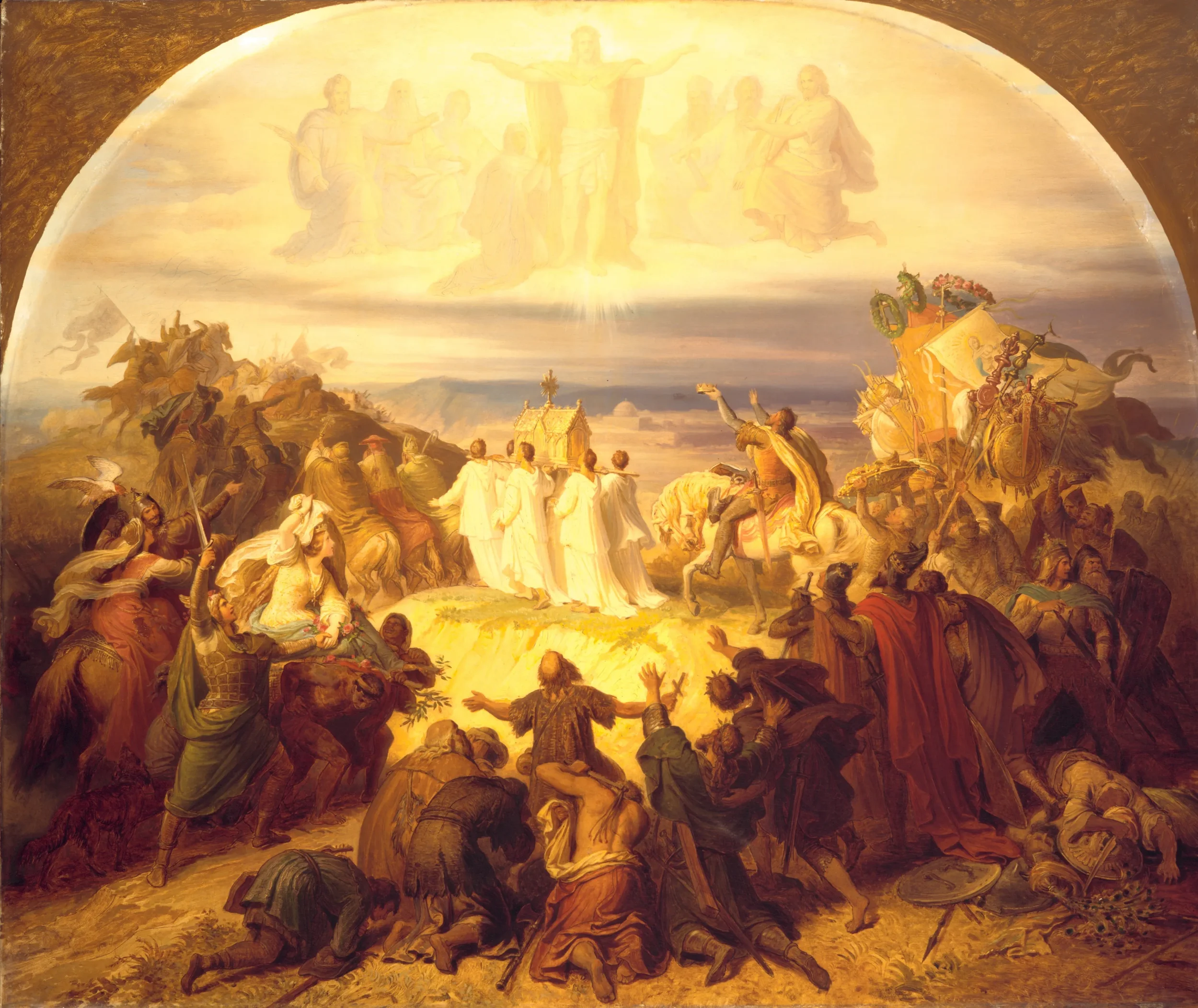
"Crusaders before Jerusalem" by the German artist Wilhelm von Kaulbach. Taken from Cape May newsletter from May 3, 2026.
4. Is there an investment thesis or trade you believed in, didn't act on, and still think about today?
The obvious one is NVIDIA. I bought it back in 2016, sold at a 200% gain not long after, and promptly rotated into small-cap biotech options. Very educational. Not very profitable.
But honestly, the one I think about more seriously is renewable energy. Through my family office years, we made a few investments in that space. The opportunity has de-risked somewhat, but I still think it's compelling, especially now. AI is driving massive energy demand, and look at what's happening geopolitically. Energy resilience matters more than ever. It's also the kind of thesis I can now translate directly into client portfolios: does it make sense to add real asset or renewable exposure here? If it interests me, it likely interests them too.
5. You warn clients about Germany's decline, but you chose to build Cape May in Berlin anyway. Is there a tension between the advice you give and the bet you've made on yourself?
Germany has real structural challenges. I don't think anyone in Europe would argue otherwise. But I've never liked the idea of just walking away from problems.
You see people who decided to move to Dubai for the tax benefits now realising that political stability matters too, and that it wasn't quite the escape they imagined. Personally, I'd rather try to contribute to making Germany better than opt out.
And our clients are, by and large, very pro-European. They're not looking to flee – they're questioning whether their taxes are being spent wisely. I share that frustration, but the answer isn't departure.
Also, Germany gets unfairly maligned on tax. Compared to many European neighbours, it can actually be quite favourable, especially for certain structures. So I'm staying, hoping for reform, and trying to do our small part.
6. What's the most painful early mistake you made at Cape May, and what did it actually cost you? And thinking back, how has it shaped you today?
We were fortunate to avoid any truly costly mistakes. But the subtler one was focus, or the lack of it early on.
When you're bootstrapping, you take work where you find it. Some of those early engagements were one-offs, or not the right long-term fit. That made business sense at the time. But it took until recently to really crystallise: who do we want to work with, and who do we not? What kind of client do we serve best?
Now we sometimes turn people away, even inbound leads from the newsletter, because we genuinely don't think we're the right fit. That's been a significant shift. Saying no is underrated.
7. What's the hardest conversation you've had with a client, and how did it change how you work?
We've been careful about who we take on, so I've never had to fire a client. But the hardest conversations aren't about ending relationships, they're about telling people what they don't want to hear.
Our clients are typically first-generation entrepreneurs, smart, curious, good investors. They get interesting deal flow. But sometimes the right advice is: "Stop. You don't have the allocation for this. And even if the deal is good, it won't move the needle for you."
The hardest version of that conversation is when you have to say: if you keep ignoring our advice, we might have to part ways. It's a real shift in dynamic, reminding the client that this is a two-way relationship. They can fire us, but we could also let them go.
It was an eye-opener for one particular client. Since then, he's been significantly more disciplined. Sometimes the most valuable thing you can do is put your foot down.

“Wanderer above the Sea of Fog” by German artist Caspar David Friedrich. Taken from Cape May newsletter from Dec 29, 2025.
8. What drew you to VC secondaries, and how do you think about their role in a wealth preservation portfolio?
Secondaries solve a real problem for clients just starting to build a fund portfolio: the J-curve. It can take five, six, seven years to get to break-even in a primary fund commitment, and that timeline puts a lot of people off. Secondaries let you cut that duration considerably — you're buying into portfolios that are already partially invested, often with more visibility on the underlying assets.
In VC specifically, I find the seller dynamics interesting. In private equity secondaries, most sellers are motivated by liquidity constraints — they have to sell.
In VC, you also get opportunistic sellers: someone who's already made 10x on a fund, has realised most of it, and simply doesn't want to wait for the last 5x. They'll sell at a 50% discount to NAV. That's a very different opportunity.
There's also an interesting selection effect within funds. A company can be genuinely exceptional, 10x, 20x, and still be overshadowed in a fund by another company with a 1000x outcome. Secondaries let you pick the businesses that are great but don't fit the traditional VC power law narrative anymore.
In a portfolio context, I'd think of it as a complement to a diversified alternatives allocation, perhaps 75% private equity, 25% venture, with secondaries layered in to manage duration and add optionality.
9. You always tell clients not to lose their optimism. What's actually kept you optimistic during moments when the pessimistic case felt genuinely convincing?
Reminding myself that nobody has a crystal ball. The future is genuinely unknowable, and that cuts both ways.
Our job isn't to double or triple our clients' money. It's to protect what they've already made, keep it stable, and help them avoid bad decisions during turbulent periods.
When clients look to you for steadiness in difficult moments and you're able to provide that, it's deeply rewarding.
On a more personal level: my wife as a sanity check, and walking the dog. Sometimes the best thing you can do when things feel heavy is step away from the screen.
10. What’s always in your carry-on?
A large stack of vitamins.
11. What’s your most irrational habit?
Still doing things manually that I could hand to AI. This morning, I summarised a research memo about AI fears when I could have used Claude, which would have been fairly ironic given our newsletter topic.
12. If you weren’t doing this, you’d be…?
A cook. Working with your hands at the end of a busy day is very calming.
13. One app you wish didn’t exist?
Bank authentication apps. I have two separate ones for Deutsche Bank alone. I understand the need for security, but enough is enough.
14. What’s one thing you collect (on purpose or not)?
Books. My wife and I are both avid readers and the stack grows faster than we can manage.
This is Secondary Thoughts by Siena – an interview series where legendary entrepreneurs and investors reflect on their investments and broader professional journeys, speaking openly about their wins and losses.
Today’s guest is Jan Voss, Managing Director of Cape May Wealth Advisors, a Berlin-based wealth management firm. Before Cape May, Jan spent his career at Goldman Sachs and two Berlin family offices. He is also the author of Cape May Wealth Weekly, a weekly newsletter on private equity, venture capital, and family office strategy.
The series is produced by Siena, a boutique VC fund focused on secondary investments in high-growth scaleups across the CEE and Nordics. Its portfolio includes success stories such as Bolt, Oura, and Booksy.