
Story
Secondary Thoughts by Siena: Interview with Alex Branton
Interviewer: Annika Ljaš Eilat
We spoke with Alex on a video call on an early spring morning.
1. You worked closely with some of the world’s most sophisticated institutional investors at Cambridge Associates. What did you observe about how they experienced illiquidity, and how did that shape your thinking toward what eventually became Nodem?
Cambridge Associates is a brilliant learning ground. As a firm, it moves billions in and out of investment managers, so you can grill celebrity GPs from day one. I worked primarily with family offices on asset allocation and manager selection. The real learning was that patience, discipline, valuation-sensitive asset allocation, and a heavy weighting to privates works very well if you truly have the duration to wait it out.
That said, I was at Cambridge until 2017, and European Venture in particular was just getting started. The big lesson was that this is a fantastic asset class. It's extending, the unrealized value is increasing, and there wasn't a commensurate liquidity tool or tools out there to help those investors. So I thought there must be a better way of doing this and launched Nodem.
2. Nodem targets markets where secondary buyers are scarce and pricing discovery is thin. What has underwriting portfolios in these geographies taught you about valuation that you wouldn't have learned in more established markets?
I’d actually flip the question. I think the bigger risk isn’t the obscure stuff. It’s the well-traded momentum names where valuation discipline erodes. You stop doing fundamental analysis. That’s the real risk: anchoring to what others are doing. Independent, bottom-up underwriting is what keeps you safe, irrespective of the geography.
We cover pretty much every geography and private asset class at this point, so we see a real mix. I've been an emerging market investor for much of my career, so I've had to deal with uncertainty and the lack of price discovery the entire time. The lesson is fairly simple, whether it's developed or frontier markets: do your own homework, particularly when looking at it from the credit side.
3. You’ve described many of your clients as ‘non-sellers’ – people who want liquidity but don’t want to give up their positions. How do you distinguish a genuine non-seller from someone who actually should be selling (what does it look like in practice), and how do you help them think through the decision?
The answer definitely isn’t always NAV lending.
A warning sign is concentrated assets with no exit visibility, where someone is seeking a NAV loan because that’s effectively what the portfolio is worth – say, thirty percent of NAV. That’s not a non-seller; that’s someone who should probably be selling.
The best portfolios we see are the opposite: growing, well-diversified, and could easily sell in the secondary market, but don’t want to. Often, they actually want to buy more of their own portfolio companies using a NAV loan – modestly levering the portfolio – and they use our cheaper capital.
The first thing we discuss is: here are the five to sometimes ten options you have from a liquidity perspective. It’s a mathematical equation. What do you think this portfolio will do? What’s our cost of capital versus current secondary pricing? We run them through everything, and if a secondary sale makes more sense, we’ll make referrals.
4. You went from being part of a $300M AUM firm to launching your own thing. Looking back, was there a moment where Nodem almost didn’t happen – and what pushed you through it?
I grew with Sturgeon from zero to $300 million, so I'd already seen the ups and downs of building an investment firm, which builds some resilience. One of the lessons I learned there is to start with a big early backer. We have Lepercq, which is a family office that bought into our vision early. That can see you through some of the harder moments.
The hardest moments are when the high-quality deal flow dips. You always think: Is there enough high-quality transactions out there to sustain this? Do people actually want my product? And then you have to adapt: lower your cost of capital, optimize the product, etc.
But what keeps you going is, one, the undeniable data on the volume of unrealized value out there; two, the fact that NAV lending is well established in other asset classes, such as buyout, so there is a well-trodden path; and three, nothing can beat executing truly win-win, fantastic deals.
5. NAV lending means underwriting private portfolios with limited comparable data. Looking back, which assessment surprised you the most – and what did it change about how you think about risk?
This goes for whatever asset class you're in, but we looked at a portfolio early on where the NAVs looked healthy, yet on a line-by-line basis, it was much weaker. You really learn to almost ignore NAVs on a capital account statement. While they can be a useful guide for trajectory, they can often be a vanity metric.
As an LP, I’d recommend proactively applying haircuts to VC/PE headline NAVs in line with public markets’ performance.
6. NAV lending has moved from niche to mainstream with some of the biggest names in private equity entering the space (EQT, Patrimium, and others). How does the wave of institutional entrants change the landscape for a firm like Nodem?
It's certainly positive. A few years ago, nearly all my conversations were about explaining what NAV lending is. Not actionable transactions. These larger players have gone out and educated the market as to what this is, so there's now a much better understanding.
Also, nearly all the names you mentioned are making $200 million in single transactions on multi-billion-dollar portfolios. There’s a huge gap for those lending sub-$100 million. Whilst Venture has matured and is now better suited to modest NAV loan usage, there are very few players like Nodem who understand the asset class and can be comfortable with portfolios of individual companies with a wide range of eventual outcomes.

7. You also advise the UK government through the FCDO (Foreign, Commonwealth & Development Office). Has that shaped how you think about the relationship between public policy and private market liquidity? How?
I've worked with quasi-public institutions for a while. Both at Cambridge, where I had LPs like the World Bank, and now advising the UK Foreign Office. I think the risk is that some of this public money can drive up valuations and prop up weaker companies, which I saw in emerging markets fairly consistently.
My personal view is that public money should be, one, highly selective, but also in many instances, first-loss to entice private capital into it. Not just sitting alongside it.
Public capital often has a fundamentally different incentive structure, and when it’s alongside private capital, you want to ensure it isn’t in any way blocking liquidity – whether that’s continuation vehicles or NAV financing.
I'd also like to see more funding of secondary funds and a greater understanding that all that capital shouldn't just go into primary funds. It should be bolstering the ecosystem and keeping the flywheel going.
8. Looking back across your career from Cambridge Associates through Columbus Point, Sturgeon, and now Nodem – what is the single most expensive (in capital terms as well as most educational) lesson you've learned about liquidity in private markets?
There are many, but I'd say: don't follow the hype. Do your own work. If it doesn't make sense, it probably doesn't.
I've seen multiple hype cycles across asset classes. From fast grocery delivery to the commodity super cycle in Mongolia. Hotels full of people gushing about a subject is not the way to invest. In those instances, they ended in zeros for myself and for others. Be willing to walk away from even the most hyped deals.
9. What’s always in your carry-on?
Kindle Scribe for books, but also the ability to capture ideas in the moment.
10. What’s your most irrational habit?
Getting to airports as late as physically possible – and then complaining about it.
11. If you weren’t doing this, you’d be…?
Setting up another business of some sort. It's the building and solving a problem that I like. I don't think it would be a tech business. I really like the education space. There's so much room for bespoke tutoring and innovative ideas. I'd probably go and look into that further.
12. One app you wish didn’t exist?
All of them, maybe. But if I had to pick one, then probably YouTube, purely based on time spent. It's always on in some capacity, and I think there's not much you can't learn more effectively through Claude or a book. It's just scary amounts of time. It's good in a way, but the opportunity cost is real.
13. What’s one thing you collect (on purpose or not)?
The less serious answer is open tabs on my browser. There are about 300 of them. The more serious answer is my daughter's artwork. She's five, so it's improving in quality too.
This is Secondary Thoughts by Siena – an interview series where legendary entrepreneurs and investors reflect on their investments and broader professional journeys, speaking openly about their wins and losses.
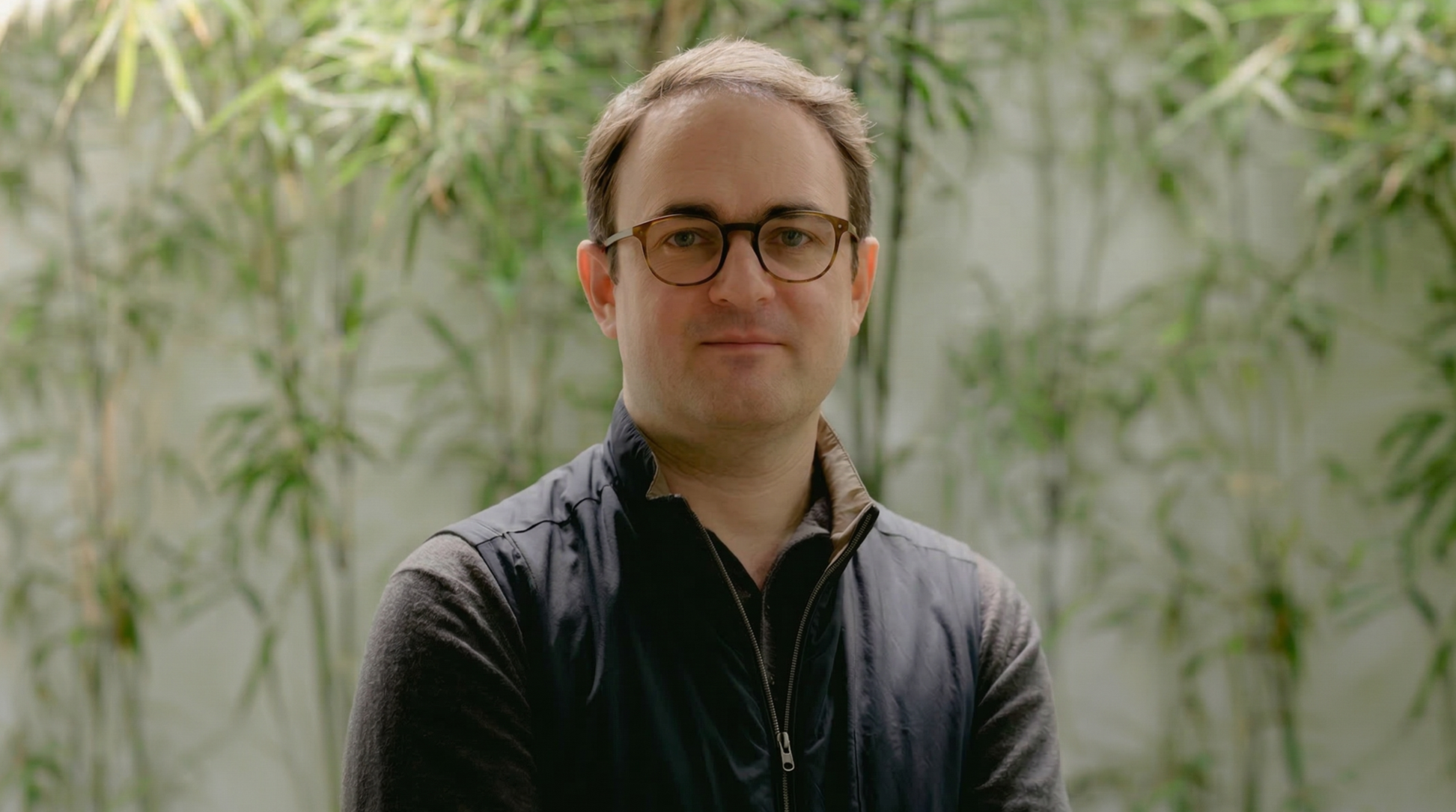
Today's guest is Alex Branton, Founder and CIO of Nodem Capital, a London-based asset manager providing NAV loans and preferred equity solutions to private market investors. Before Nodem, Alex was a senior member of the PE and VC teams at Sturgeon Capital, and an investor at Cambridge Associates. He also serves as an international investment advisor to the UK government through the FCDO.
The series is produced by Siena, a boutique VC fund focused on secondary investments in high-growth scaleups across the CEE and Nordics. Its portfolio includes success stories such as Bolt, Oura, and Booksy.
Enjoyed this? Take a look at our other interviews with the founder of Isomer Capital, Vishen Lakhiani, and many others. 👉